As we know, the diverse nature of the poems, dispersed as they were in place, time, poetic type, and social function yet precludes any neat summary of Helen’s role and validates her flexibility as a vehicle for an array of artistic and cultural concerns. She makes her appearances in a broad and varied genre, which are tied closely to the particular place, period, and mode of performances. She also engages with a specific set of historical and cultural circumstances. This paper seeks to discuss how the representation of Helen’s character and her role in the Trojan War have changed over time and the reason for these changes.
In the Iliad, Homer placed a seductive cause, the quest for beauty, to emphasize Helen’s status of disputable but not destroyable. Beauty was among the greatest of all the archetypes in Homer’s pantheon. It was endowed with the power to undo even the political arrangements of Olympus. As in the Iliad, Hera told Aphrodite to offer her “the Sex and Desire” (Iliad. 14. 196) so that Aphrodite’s charms diverted the will of Zeus and when Zeus saw her, the “lust enveloped him” (Iliad. 14. 296). As possessing this “power,” Helen alone escaped the slavery in store for the others—Briseis, Andromache, and Hecuba. Helen’s transcend economic categories and her identity as a free woman were depicted not only by Homer’s formula for Helen, “the daughter of Zeus,” but also by her overwhelming beauty that wrote its laws.
Despite her non-infringeable beauty, Helen’s personality was unpredictable. It was not hard to imagine an overbearing, truculent king like Agamemnon, a garrulous old soldier like Nestor, and a vain, young hotspur of the royal house like Paris. However, Helen stood on another ontological phase. This raised the following questions: Was she a goddess or a human? Was she seduced by Paris or raped? Was she a libertine or the victim of society? The answers to those questions varied, corresponding to different interpretations and historical circumstances. Even in Homer’s narratives, these questions stayed unsolved. On the one hand, Priam said: “You are not to blame for this war with the Greeks. The gods are” (Iliad. 3. 172). Athena, on the other hand, called Helen “bitch” directly (Iliad. 3. 442). Thus, Homer did not know what to make Helen, who was as hated as she was privileged.
Altogether with her power of beauty and enigmatic personality, Helen functioned as a sign that interwoven and was suggested through the whole story of the Trojan War. She was not allowed to live in the illusion that the story was hers, which, though, was shaped as she chose. Just like the accessory of Aphrodite, though Helen’s godlike power and ambiguity provided her privilege, she was not able to escape her fate as doomed by gods. “Only she must, consistently and from the beginning, learn to convert or subvert of her daily life into her function as the glyph for shame/shamelessness in the storybook of the tribe.” [1] In the Iliad, Chapter 3, Iris lured Helen out to the city walls. Why was Helen needed at the city gates? If Helen was required as a witness to the covenant between the Greeks and Trojans, the plot also required that she be witnessed, because “her function is to be proudly displayed by the Trojans from the tower, and gazed at by the tormented Greeks, as the prize worthy of such a contest.” [2] Thus, Helen, so close to godhood, must act as Aphrodite’s sign. Like all signs, Helen must be equivocal in her character. The greater the sign, the more equivocal its meanings: that was in the nature of the sign. However, the standard social contracts did not bound Aphrodite’s favors. Both Trojans and Greeks could not agree on Helen’s significance, even when they held a contest secured by oaths sworn in the presence of the gods, because Aphrodite as a goddess, the archetype of which Helen was the human copy, could not be netted in social signifiers.
In the Odyssey, the dark side of Helen that destined to be condemned gradually faded away, which, through three respects, augmented the adoration for her divine nature.
First, the link between Helen and Odysseus created a keen romantic interest. Helen told Telemachus about his father’s secret mission and of the secret meeting between Odysseus and Helen herself deep in the heart of the enemy’s city (Odyssey. 4.240-64). The courtship aspects of Helen’s story, though they remain subliminal in the story itself, were reinforced by the other stories in the Odyssey, where Odysseus in disguise gained access to the private rooms of a goddess or queen. From Troy to Ithaca, Odysseus laid a trail of such trysts with resourceful and charismatic women, which was one of the recurring themes of the poem. By including Helen among these wondrous women, the Odyssey reminded us that though the Trojan War was over, beauty still reigned supreme, and Helen still retained her formidable power to determine the significance of men.
Second, after the Trojan War, Helen was safely at home in Sparta again. This Helen deviated from her Iliad’s counterpart of conflict and turbulence. She became a symbol of repentance, industriousness, hospitability, and domesticity (Odyssey. 3. 317-19). Her shameful status has been resolved, and she became not a wife and a mistress, but merely a wife. To be noticed, Homer left the interval between the fall of Troy and the domestic scene in Sparta blank. Other sources held that when Menelaus met Helen, he advanced to kill her. However, once under the influence of her charisma, he dropped his sword (Ibycus, frag. 296, PMG). Without disclosing how Helen was domesticated, Homer depicted the husband and wife, with youthful excesses behind them, peacefully enjoying a comfortable middle age with the past conflicts (miseries during the Trojan War) resolved.
Third, the Odyssey implied more explicitly Helen’s divine nature, though it remained nothing more than a suggestion. The Iliad removed the most conspicuous aspects of Helen’s divinity, leaving her only a sign of transcendent power with an ambiance of divinity. An uneasy awareness prevailed in the Iliad that Helen wielded daimonic powers (“[A]ny natural function which has the power to take over the whole person… The daimonic can be either creative or destructive, but it is normally both… The daimonic is obviously not an entity but refers to a fundamental, archetypal function of human experience — an existential reality”) [3]. These powers were made visible and active in the Odyssey: “Helen will lose neither life nor honor; instead, she will be given, according to the syntax peculiar to the Homeric epic, immortality in return for having no honor to lose. That is to be her sign for eternity: to be the woman with no shame. “[4] Helen was fated to spend eternity in a state of grace or as close to it as human impersonations of the gods can reach. The version of the Odyssey (4. 561-69) held that Menelaus would move to the Islands of the Blest, an indication that he and Helen would unite for all eternity. In this way, even marrying Helen was enough to make Menelaus the son-in-law of Zeus, and this relationship, in turn, was sufficient to guarantee Menelaus’ immortal bliss. Helen’s figure, as depicted in the Trojan War, who was only a victim who lived a swirling life during wartime and suffered from being dishonored, finally reached its conciliation and settlement.
Nevertheless, in the Odyssey, Helen has risen above the social order to become one of the dreaded goddesses whose influence played a crucial part in determining the plot of the poem. Helen, instead of being portrayed like a sign in the Iliad, had the wisdom to drop into the wine a medicine that alleviated grief and anger and brought blessed amnesia (Odyssey, 4.222-26). Helen, who was portrayed in the Iliad as the cause of the Trojan War, has become the healer, whose analgesic medication would let a man bear the death of his father without grief. We could attribute this shift of perspective to the more considerable latitude that the Odyssey allowed for fantasy and romance from the first two points I mentioned. Also, the gist has been relocated from the “mourning and death” in warfare to ultimate “returning and reunion.”
After the legend of Homer, the next creative period that was captivated by re-addressing the story of Helen was the era for the Archaic lyric. Archaic lyric, the earliest Greek form of poetry besides the epic genre, embraced works of diverse styles and subjects composed for public and private occasions. Lyric frequently engaged with the Homeric tradition, and symposiasts poetry was much preoccupied with Eros and Beauty. [5] Helen, in this way, was tailored for such concerns, and judging from our rather meager surviving fragments, the lyric poets viewed her with different aspects. Different portrayals of Helen were generally due to artistic impressions of female beauty and the extent of the liberation of society.
One form of lyric poetry was the poetry of blame. “The most substantial surviving specimen of this genre is the crude, colorful poem by Simonides (7th-c. lyric poet from Amorgos) that equates different kinds of women with various animals” [6]. Simonides also described the mare woman as a beautiful sight for others, but evil for the man who had her. The poem alluded to Helen explicitly by saying that “Zeus made [women] as the greatest evil, and shackled us with this unbreakable fetter, even since Hades received those who fought on account of a woman” (Poem 7.115-18). On the other hand, several poems originated from Lesbos, in the eastern Aegean, which had a reputation for female beauty, luxury, and uninhibited eroticism [7]. Women held high esteem on Lesbos, where Helen was named. The historian Wendy Slatkin wrote:
” Considering the severe restrictions on women’s lives, their inability to move freely in society, conduct business, or acquire any type of non-domestic training, it was not surprising to find that no names of important [female] artists have come down to us from the classical era. Only the poet Sappho received high praise from the Greeks; Plato referred to her as the twelfth Muse. Significantly, she came not from Athens or Sparta but from Lesbos, an island whose culture incorporated high regard for women. ” [8]
Stesichorus came from the Greek West, Sicily, who, respecting woman, tried to exonerate Helen from her crimes. He believed that Helen’s shame was not resolved by merely removing Menelaus to the Islands of the Blest with her together, because what happened later cannot offset what happened before. He, thus, proposed the more radical solution to erase Helen from the story altogether and replace her with the goddess who had never lapsed from her pristine purity. [9] (Because almost all of Stesichorus’ work has been lost, we can only zoom into his discourse by Plato’s Phaedrus.) Socrates agreed with Stesichorus’ effort: “For these who err in telling stories, there is an ancient purification, of which Homer was not ware, but Stesichorus was: That story is not true; you did not go in the well-benched ships; you did not reach the citadel of Troy” (Phaedrus, 243ab).
Stesichorus was the first author we know of to do a specific project of defending Helen. He did not argue that she was an innocent victim of abduction, or that her elopement was justified, but denied, in his recantation, that she went to Troy at all. Helen might be blamed by attesting to her traditional actions, for which she was presumed to be both responsible and culpable. Hence Stesichorus defended her by repudiating those actions altogether. By shifting the burden of the Trojan War onto the gods’ shoulders, Stesichorus left Helen’s beauty unsullied by misbehavior. Plato wrote: “It might be so if madness were simply evil, but there is also a madness which is a divine gift” (Phaedrus, 244a). In this way, the gods were not exempt from moral judgment. Moreover, sexually transgressive female divinities have always been a matter of concern. Aphrodite, for instance, “dallies with various lovers, blithely disregarding her marriage to Hephaestus, but that does not stop him from reproaching her as a dog-eyed adulteress and doing his best to control her behavior (Odyssey. 8.306-20).” Thus, although goddesses did have more power and freedom than mortal women, there was still a certain sexual standard on Olympus, and which, as a result, made gods susceptible to criticisms. In this way, Stesichorus’ tale made Helen complicit in policing of her purity and successfully defended her reputation.
However, the problem was that the evidence was not sufficient due to the absence of the original copy of Setsichorus’s work so that he could not dispute Homer’s narrative to be false. Other resources reported that Helen was living with Achilles after his death (Paus. 3.19.11-13), and Helen did go to Troy with Paris and commanded Homer to compose the epic (Isocrates). These versions, against Setsichorus’ purpose of absolving Helen from her misdeed of causing the Trojan War, underscored Helen’s serial polyandry. In this way, though Stesichorus was consistent in his settings and aiming, we need not take Stesichorus too literally when he declared Homer’s story to be untrue, and not until we obtained enough literary source of Stesichorus could we rely on his artfully constructed Helen.
Later than the Archaic period came the Athenian tragedy. The Athenian tragedy was not an elite mode of entertainment but a spectacle for the citizenry at large. Audiences were engaged and enthusiastic, and participation in the chorus was an essential civic obligation. In contrast to epic and lyric poetry, which were mediated by a single performer, theoretical characters were physically present on the stage and addressed each other in person. The playwright and director still controlled the story, and also freed privilege, undermined, or withheld particular points of view. [9] Nevertheless, the characters have become present to our eyes and ears. Drama thus presented itself as less mediated than other genres, providing the illusion of direct access to ancient figures. As a result, it was widely used to resemble a more famous and representative figure by specific character through the drama, because the familiar historical context was more accessible for audiences to be empathetic.
The earliest tragedy dealing with Helen was Aeschylus’s Agamemnon, which was produced in 458 BCE as the first play in his trilogy, the Oresteia. Helen was a persistent background presence in the Agamemnon, evoked compellingly by the chorus in their songs. However, she did not appear as a character, nor did we have her voice heard. Thus, she was deprived of the opportunity to seduce or mollify those who would blame her. Therefore, this discourse left the field open for her enemies and rendering the audience receptive to their point of view. Clytemnestra, in this way, was a visible embodiment of female evil. At the same time, Helen was a sinister shadow lying behind and inseparably linked with her half-sister.
The chorus equated the feminine Helen with her violent sister. These sisters were not only prone to unbridled sexual desire but highly adept at exercising certain forms of feminine power. Clytemnestra was introduced as “a woman with a man’s heart” (Agamemnon. 11). At the same time, Helen was first mentioned as “a woman bedded by many” (Agamemnon. 62). These pithy descriptions echoed the two different kinds of threats to the Greek gender system: one woman who thought like a man, another who married many men instead of one. Clytemnestra disrupted the order by exercising political power, Helen, by making herself a source of male dispute.
On the other hand, in this drama, despite the different types of danger embodied by them, the two sisters were ultimately assimilated to each other. Clytemnestra used textiles to entrap Agamemnon, both literally in the bath and figuratively, by luring him to walk on the precious tapestries, and her speech of welcome was a masterpiece of mendacity. She assured her returning husband that she was a good wife, a “watchdog” of his house, “loyal only to him, an enemy to his enemies” (Ag. 606-10) — the converse of her sister. However, since we know full well that she was lying, this self-description served the opposite of its superficial purpose, assimilating her to Helen. When the chorus called her the “convert keeper of the house” (Ag. 154), the phrase could just as well apply to Helen.
Moreover, most fundamentally, both sisters acted independently of men, whom they regarded as replaceable and dispensable, refusing to allow their desires to be subjected to a male constraint. Instead, they turned the tables and controlled their husbands in ways that were tailored to the men’s characters as well as theirs. Menelaus’s inability to control his wife led to Helen’s abduction. The chorus used a whole series of active verses for her departure, including the recurrent three that conveyed the essence of her transgression: “leaving,” “went,” and “sailed away” (Ag. 403, 407, 691). She was unrestricted by the entanglements of fate, as symbolized by constraining fabricates. She was a dream or winged creature that her husband could not hold: “he reaches out to touch, but her figure slips through his desperate arms” (Ag. 422-24). In this way, it was reasonable to place accusations to Helen because she was such an assertive entity to cause all the catastrophe in the Trojan War actively.
In this way, Eduard Fraenkel, a German scholar, brilliantly conveyed the effect of Helen’s presence in Troy in his magisterial commentary: “The individual traits combine to form a figure whose many-colored bewitchingness, gentle and at the same time powerful, lays the hearer under its spell. The air of impersonality, of super-personality, raises Helen above the merely human, removes her from among her kind, and brings her close to an unknown power.” [10] This combination of beauty, power, and the bloody slaughter was portrayed in a graphic image offered by the chorus just prior to describing Helen’s arrival at Troy:
“Once a man reared in his house, a lion cub, torn from the breast while still a suckling whelp. When little, it was so gentle and friendly to children, and always a delight to the old.
……
But as time passed, it showed the true temper of its breed and returned its foster parents’ kindness by slaughtering their herds. A foul forbidden feast that stained the house with the stench of blood (Ag. 717-722, 727-32). “
The following image of Helen as a charming cub that seemed tame at first but grew up and ran amok vividly conveyed the threat to a man’s household by taking in such a creature as a bride.
Aeschylus, indeed, ascribed denunciations solely to Helen. “Oh demented Helen, you wasted all those lives, under the walls of Troy” (Ag. 1455-57). Although Helen’s behavior was just one of many threads in the web of causation that generated the Trojan War, the male participants were free from blame. She was presented not as a disputed object of male strife but as the essence of the conflict itself. By holding her responsible for the entire sequence of events, the chorus treated Helen as the fundamental initiating force of destruction, linking all the activities of the Trojan War and its aftermath into one tidy causal chain.
This threatened violence of the vengeful female was chiefly encapsulated on female independence. As an opposite figure from Athena, the representative Greek god, who was a virgin, Helen embodied Furies (Ag. 749). In that state Helen’s lack of self-control destroyed the minds and lives of men. However, for Helen to be honored, she must learn to control her passions (the Fury. 832-33, 900). This would have made her an instrument, in turn, of Athenian self-restraint (the Fury. 1000). When Helen put aside her anger, she also voluntarily gave up her independence, becoming not only beholden to Athena but also subject to her authority (the Fury. 897, 902). In this course of the trilogy, the exercise of political power shifted from the aristocracy legend, where women played a significant and visible role, to democratic Athens, where women were ex-temptation to sexual misconduct. The vengeful female was redirected into Athenian legal justice administered by men. Thus, the foundation of the court noted that classical Athens, with its democratic institutions, was founded on the suppression of such independence– the threat to Greek cultural ideology of women’s subdued status embodied in Helen. Believing that men’s role as moderating women, Aeschylus used Oresteia as social propaganda to educate Athenian women to be ethical by charging Helen’s wrongness that she exclusively caused the Trojan War.
On the other hand, Euripides, as a more radical democrat, attempted to ameliorate public suppression on women’s status and exonerated Helen from censure. The flaws in several previous defensive revisions were apparent. Kannicht [11] considered that Stesichorus did not so much rationalize the Homeric Helen as restoring her to her status as the Spartan goddess. He also argued that Herodotus rationalized and demystified the Stesichorus story by removing the eidolon, thus leaving the Greeks and Trojans to war over something less than an eidolon, “a Nothing.” The previous versions were either contradicted history that engaged revealed that moving Helen from Troy did not settle the issue or compounded her with indeterminacy, which made Euripides modify the defense of Helen.
Dating from the winter just following the Athenian disaster at Syracuse, when Athenian spirits and fortunes were at their lowest, some have read the Helen as Euripides’ lament over the delusions that send men to war, which we could infer that Euripides, in some way, was calling for peace. War is incidental to this play, in contrast to other plays like The Trojan Women, in which war is the central fact. In Helen, war was something that happened elsewhere and, in another time, a distant thunder that will not severely impact the essential entertainment of reunification. [12]
In this revision, Helen herself was a character endowed with credibility. Her story of being seized by Hermes was a heartrending image of a young woman’s fate. The song between Helen and the Chorus (Helen. 164-250) brought to mind the old stories of Helen as a girl at Sparta. She was the innocent bride whom Hermes seized and set down “in this unprosperous land” (Helen. 247), which was more genuinely tragic than she knew. This circumstance was a sort of imprisonment that nullified Helen’s legitimate identity in Troy, Sparta, and even Egypt. Helen was first revoked at Troy, where her shadow was. She was also repealed in Sparta because we cannot think of Helen playing “Helen” at home while her husband was fighting her right name abroad. Finally, she could only be nullified in Egypt, while her reputation still hanged in the balance as she declared: “I am dead in effect, if not in fact” (Helen. 286). What she was not allowed was a present, since her eidolon occupied the exact plot slot. While her imaginary self was alive and well at Troy, it would be unseemly for Helen to create in people’s minds a bewildering oscillation between her and her lustier Trojan twin.
It could be said that a theme in Euripede’s Helen was treated with fundamental seriousness, and something emerged less about the gods than about humans living in the shadow of their signifiers. [13] Euripides placed Helen at the center of the debate, as the person most nearly conscious of the plot to separate her body from her name. She knew that she was not her name, sign, icon, and image. She was, however, powerless to make this distinction clear to anyone else, even to her husband, until her shadow disappeared. This theme, as Segal claimed, alienated Helen from herself, in which Euripides was endowed with insight, pathos, and compassion. [14]
It then turned out that the original Helen was addressed to be nothing more than a phantom that was removed twice from the original. Euripides, in this way, left Helen to herself while worked assiduously to erase her shame. To eliminate the indeterminacy and the failure of defense for Helen, Euripides designed a plot to write Helen back into the text. Euripides’ success in his depiction was not like his pioneers who only exposed the conspiracy, which required Helen’s complete absence from the story. However, he created the new Helen that was exact replica of the old Helen. The new Helen must be beautiful, graceful, considerate, witty, sad, even tragic, to meet the formatic need of tragedy. This Helen, in contrast with the old one that her completely erased, was credible but still circumscribed by one taboo: She must not, whether by her own will or under any other kind of compulsion, enter the odious foreign bed. [15] This action was the most blameful deed done by Helen’s shameful phantom. Euripides, for this reason, wrote: “I will kill you on the tomb’s surface, and then kill myself” (Helen. 842). In this way, to make the taboo credible, Helen herself consented to it. Helen, thus, in Egypt, was a woman whose chastity was initially protected by Proteus and later enforced by her unyieldingness to Theoklymenos. Now, Helen had internalized the taboo, and the Helen we perceived has consecrated herself to virginity and removed from all possible of blame from the center of the Trojan War.
In summary, these eulogies have been interpreted as audacity adjudicated performances, demonstrating the orator’s skill at making the worse cause to be even more blameful or appear the better. However, a full discussion of methods of rehabilitating Helen deserved separate treatment. The problems that whether she was a victim or libertine, a calamity that caused the misery or herself a tragic figure that was caused by gods’ wills, and whether she was to be blamed or to be exonerated, were all unsolved. Her role in the Trojan War, as a result, varied based on different evidence and interpretations. Helen, on her side, for all poets’ polishing, was as much an idol as she ever was, and remained as a conspicuous daimon mediating between being and significance to be discussed more thoroughly.
Reference:
- Austin, Norman, editor. Helen of Troy and her shameless phantom. Myth and Poetics. Ithaca (N. Y.): Cornell University Pr., 1994. Shameless Phantom, 29
- Shameless phantom, 31
- Rollo May, Love and Will, ISBN 0-393-01080-5. p. 123–124.
- Shameless Phantom, 26
- Blondell, Ruby. Helen of Troy: beauty, myth, devastation. Oxford ; New York: Oxford University Pr., 2013. 5: 96
- Meredith Brooks, 23
- Beauty, myth, devestation. 5: 97
- Slatkin, W. Women Artists in History. Pearson, 2001, 42
- Bassi, Karen. 1993. Helen and the Discourse of Denial in Stesichorus’ Palinode. Arethusa 26: 53.
- Fraenkel, Eduard, ed. 1950. Aeschylus: Agamemnon. 3 vols. Oxford: Clarendon Press.
- Kannicht, R., ed. 1969. Euripides, Helena. 2 vols. Heidelberg: Winter. 1: 47
- Beauty, myth, devastation. 6: 124
- Beauty, myth, devastation. 6: 139
- Shameless Phantom, 188
- Helena, 1:60

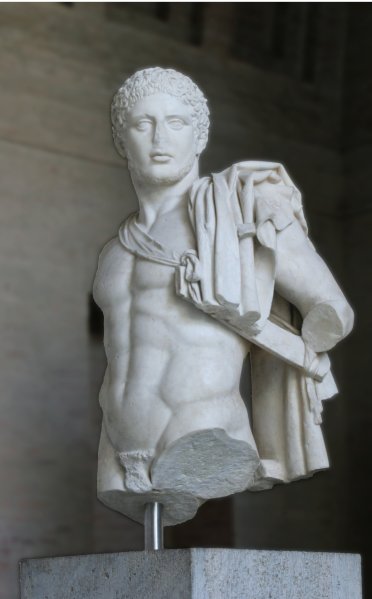
 Helen in the Trojan War